Cart
0
How lab grown diamonds are made?
Lab grown diamonds are real diamonds created using advanced technology that replicates the conditions required for diamond formation. Unlike natural diamonds, which develop deep within the Earth over extremely long periods, lab grown diamonds are created in controlled laboratory environments using a diamond seed and a carbon source.
But how lab grown diamonds are made exactly? There are two primary methods used today: HPHT (High Pressure High Temperature) and CVD (Chemical Vapor Deposition). Both methods create diamonds with essentially the same chemical composition and crystal structure as natural diamonds.

The process of making lab grown diamonds
The production of a lab grown diamond involves several carefully controlled stages. Although HPHT and CVD use different technologies, both begin with a small diamond seed that provides the crystal structure from which the new diamond grows.
The basic process can be understood through these steps:
-
- A diamond seed is selected.
- Carbon is introduced into a controlled growth environment.
- Heat, pressure or chemical reactions cause carbon atoms to crystallize onto the seed.
- The diamond crystal grows gradually.
- The rough diamond is removed and prepared.
- It is cut, polished and graded before becoming a finished gemstone.
The two major methods used for this process are HPHT and CVD.
How are HPHT lab grown diamonds made?
HPHT stands for High Pressure High Temperature. This method recreates some of the extreme pressure and temperature conditions associated with natural diamond formation.
A small diamond seed is placed inside a growth chamber along with a carbon source and a metallic flux. The chamber is subjected to extremely high temperatures and pressures. Under these conditions, the carbon dissolves into the molten metal and gradually moves toward the diamond seed.
As the carbon reaches the cooler seed, it crystallizes and forms new diamond material. Over time, the diamond crystal grows around the original seed. GIA reports that HPHT growth can involve temperatures of approximately 1,300–1,600°C and pressures of around 5–6 GPa, depending on the process.
Once the desired crystal has grown, it is removed from the growth chamber and prepared for the next stage: cutting and polishing.
In simple terms, the HPHT process uses extreme heat and pressure to transform carbon into a diamond crystal.
How are CVD lab grown diamonds made?
CVD stands for Chemical Vapor Deposition. Instead of using extremely high pressure, this method grows diamonds inside a controlled vacuum chamber.
The process begins with thin diamond seed plates placed inside the chamber. A carbon-containing gas, commonly methane mixed with hydrogen, is introduced into the chamber. Energy from microwaves creates a plasma that breaks down the gas molecules.
The released carbon atoms gradually settle onto the diamond seed and crystallize layer by layer, allowing the diamond to grow over time. CVD diamond growth generally takes place at much lower pressures than HPHT, although temperatures can still reach several hundred to over 1,000°C depending on the specific process.
As the diamond grows, the surface may be periodically treated or polished to remove unwanted non-diamond carbon before growth continues. Once the desired size is achieved, the rough crystal is removed and prepared for cutting and polishing.
In simple terms, CVD creates a diamond by depositing carbon atoms onto a diamond seed in a controlled chamber, allowing the crystal to grow layer by layer.
HPHT vs CVD: how are lab grown diamonds created differently?
Both HPHT and CVD can produce genuine laboratory-grown diamonds, but the growth environments are different.
| HPHT | CVD |
|---|---|
| Uses extremely high pressure and temperature | Uses a controlled vacuum environment |
| Uses a carbon source and metallic flux | Uses carbon-containing gas |
| Carbon crystallizes around a diamond seed | Carbon deposits onto a diamond seed layer by layer |
| Mimics key conditions associated with natural diamond formation | Uses a chemical vapor growth process |
| Produces rough diamond crystals that are later cut and polished | Produces rough diamond material that is later cut and polished |
Despite the different manufacturing methods, both processes create diamonds rather than diamond imitations. Laboratory-grown diamonds have essentially the same chemical composition and crystal structure as natural diamonds.
What happens after a lab grown diamond is created?
Growing the diamond crystal is only part of the process. After the rough laboratory-grown diamond is removed from the growth chamber, it needs to be prepared for use in jewellery.
The rough crystal is carefully examined before it is cut and polished into its final shape. Skilled diamond cutters determine the appropriate proportions and facets to bring out the stone's brilliance and appearance.
The finished diamond can then be graded and identified by a gemological laboratory. This is particularly important because laboratory-grown diamonds can look the same as natural diamonds to the unaided eye. Specialized gemological testing can identify their laboratory origin and, in some cases, the growth method used.
At House of ANJewels, certified lab grown diamond jewellery is accompanied by an IGI certificate, providing information about the diamond's authenticity and grading.
How long does it take to make a lab grown diamond?
The growth time depends on the method, size and desired quality of the diamond.
HPHT diamonds can take anywhere from hours to several weeks depending on the growth conditions and desired size. CVD growth generally takes several weeks, with the diamond developing gradually through repeated growth stages.
After the crystal has been grown, additional time is required for cutting, polishing and grading before it becomes a finished diamond ready for jewellery.

How lab grown diamonds become jewellery
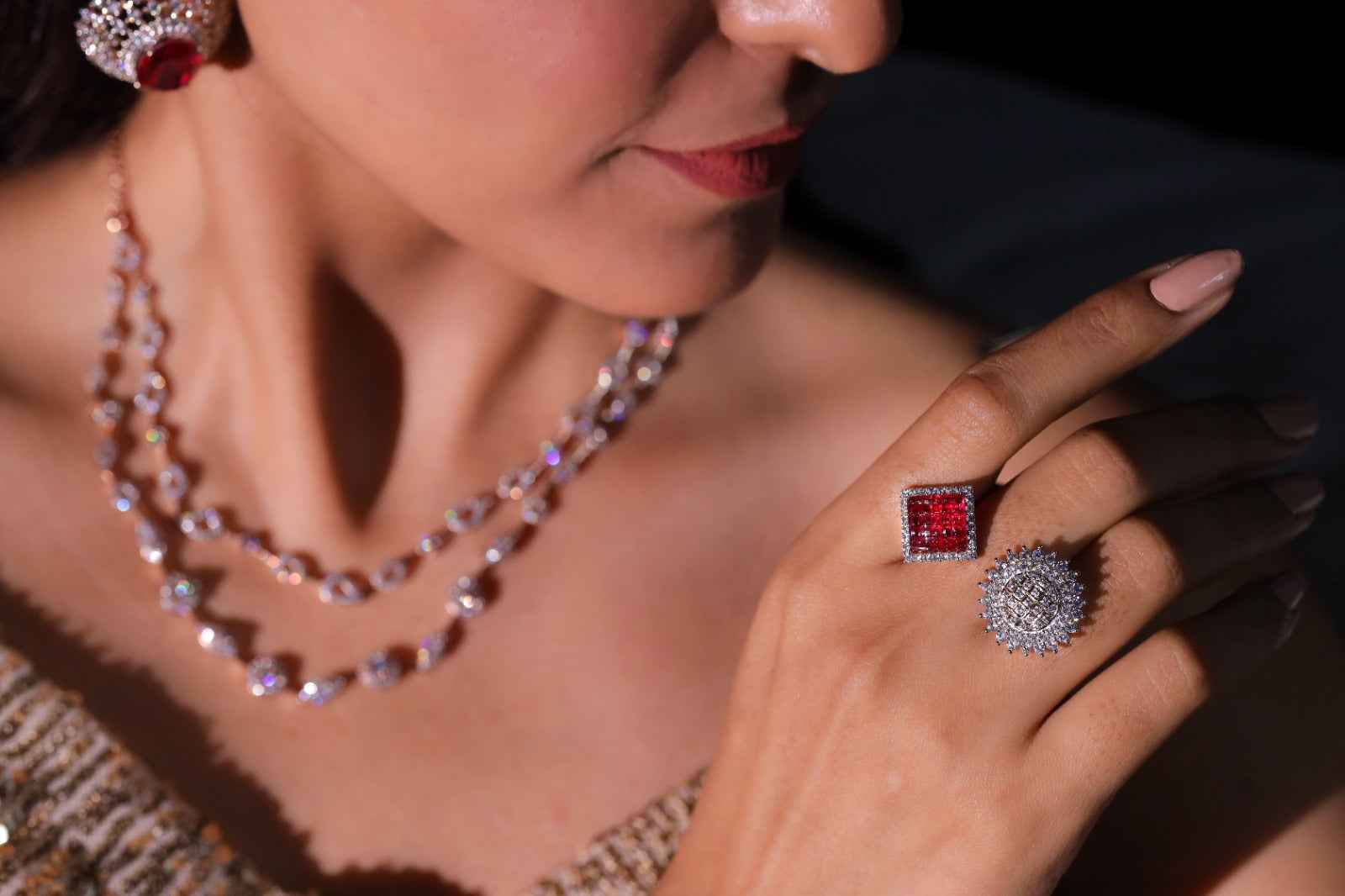
Once the diamond has been grown, cut and polished, it can be incorporated into different types of fine jewellery. The finished stone can be used in rings, earrings, necklaces, bracelets and pendants, depending on the design.
House of ANJewels offers lab grown diamond jewellery across several categories, including lab grown diamond rings, diamond earrings, diamond necklaces, diamond bracelets and diamond pendants. These collections demonstrate how laboratory-grown diamonds can be transformed from rough crystals into finished jewellery designs.
Why understanding the making process matters
Understanding how lab grown diamonds are made makes it easier to appreciate what goes into creating each stone. From the initial diamond seed and controlled crystal growth to cutting, polishing and certification, every stage requires precise technology and skilled craftsmanship.
Whether produced using HPHT or CVD, the result is a laboratory-grown diamond with the characteristic crystal structure and properties of diamond.
If you are exploring lab grown diamond jewellery, you can also explore the complete House of ANJewels collection to see how these diamonds are crafted into contemporary jewellery.
Frequently asked question
Are lab grown diamonds real diamonds?
Yes. Lab grown diamonds are real diamonds. They have essentially the same chemical composition and crystal structure as natural diamonds; the primary difference is their origin. Natural diamonds form in nature, while laboratory-grown diamonds are created in controlled laboratory environments.